We’ll introduce the background and key features of Kokoro Group’s original “Kitsune no Yomeiri” style.
What is “Kitsune no Yomeiri”?
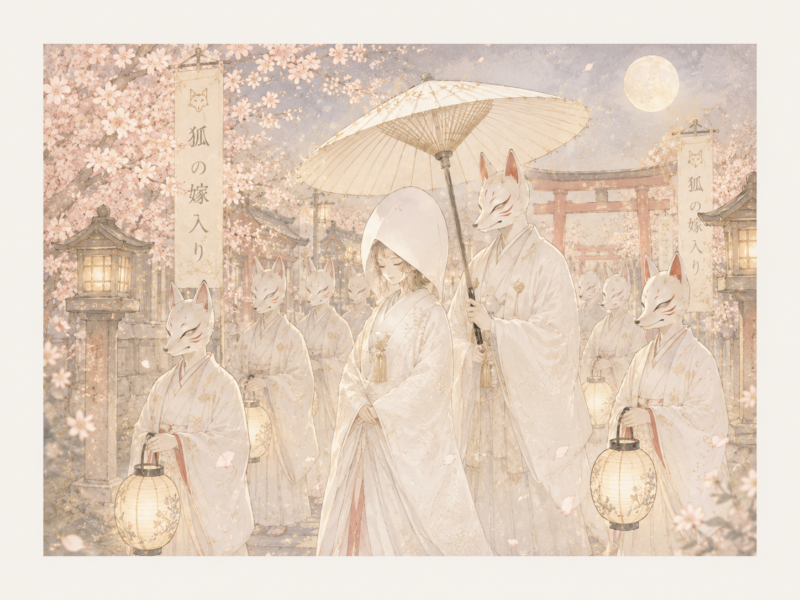
The Higashiyama area around Kodaiji Temple has long been associated with old legends and mysterious stories. In the past, strange lights were sometimes seen at night and were believed to be kitsunebi, or fox fire, created by foxes.
Traditional bridal processions also took place at night, with rows of glowing lanterns leading the bride to her new home. From a distance, the lanterns were said to resemble fox fire, which is one explanation for the name Kitsune no Yomeiri — “The Fox’s Wedding.”
Inspired by this local legend, Kodaiji once recreated the Fox’s Wedding as a special procession through the streets of Higashiyama. A bride dressed in a traditional white wedding kimono, called shiromuku, rode in a rickshaw accompanied by traditional Japanese music.
It was also believed that seeing the Fox’s Wedding could bring good luck, making the procession a magical and memorable part of Kyoto’s local culture.
What is Kyoto Kokoro Group’s “Kitsune no Yomeiri”?
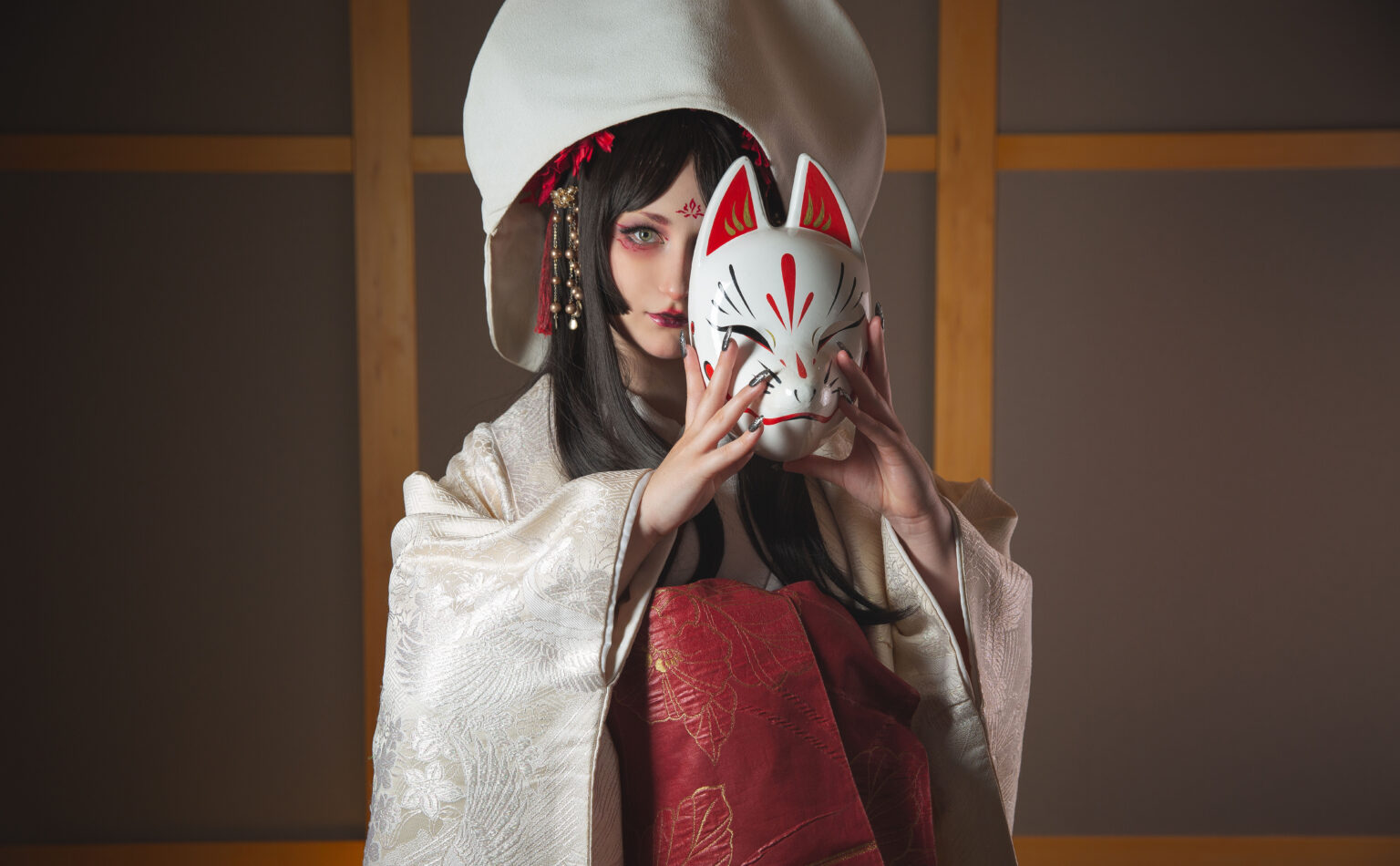
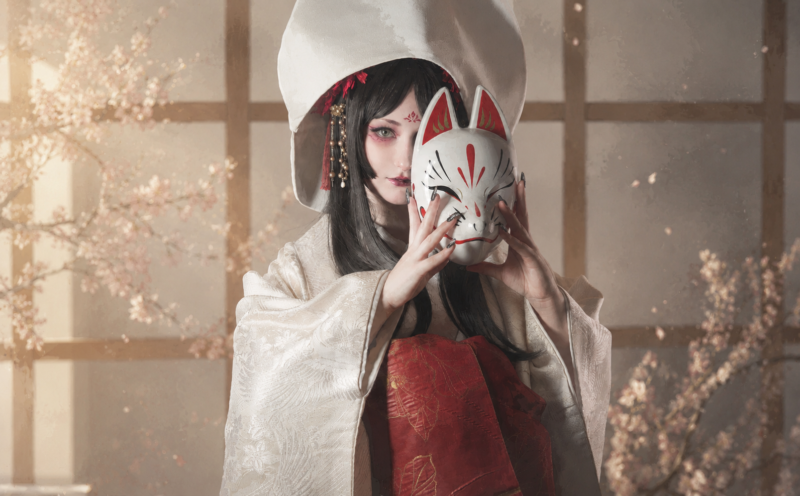
Kyoto Kokoro Group created this photography experience inspired by the beautiful Kitsune no Yomeiri procession, allowing guests to enjoy a glamorous yet mysterious bridal look in traditional white wedding attire.
The key to the striking makeup is the vivid eye lines and decorative designs painted on the forehead, adding an otherworldly, fox-like feel to an otherwise elegant look.
Because the shoot features traditional Japanese bridal garments such as the wataboshi hood and shiromuku kimono, it is also popular for unique pre-wedding photos and couple shoots.
Japanese bridal attire
In Japan, the shiromuku has long been worn as traditional bridal attire.
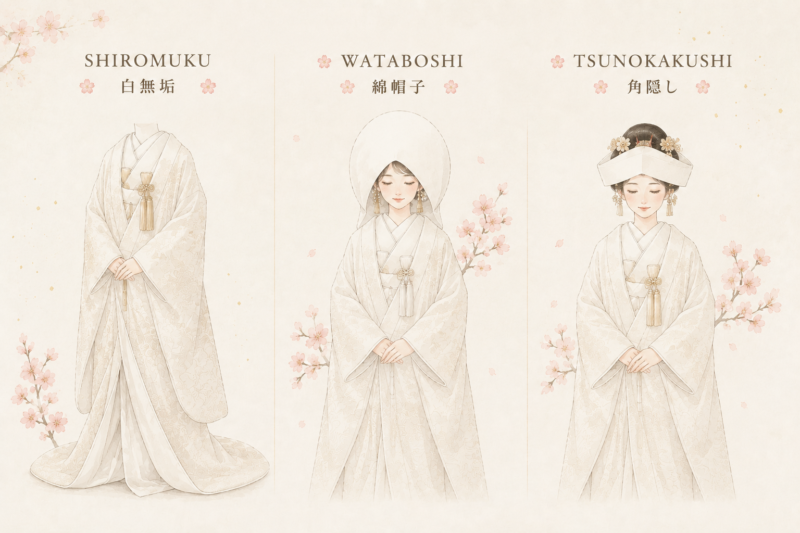
A shiromuku is one of the most formal types of Japanese wedding kimono, with everything—from the kimono itself to the accessories—dressed entirely in white. The color white is said to symbolize purity and the bride’s willingness to “take on the colors” of her new family.
A shiromuku is traditionally paired with either a wataboshi or tsunokakushi.
The wataboshi is a traditional white bridal hood. While it looks quite different from a Western wedding veil, it carries a similar meaning: traditionally, the bride was not supposed to show her face to anyone but the groom until the ceremony was complete.
The tsunokakushi is a white cloth worn over a traditional Japanese bridal hairstyle. Its name literally means “hiding the horns,” and it is said to symbolize hiding the “horns” of anger and becoming a gentle and graceful wife.
Available Locations
The Kitsune no Yomeiri plan is available at two locations: STUDIO KOKORO ARASHIYAMA in Kyoto and ESPERANTO KOKORO MINAMIAOYAMA in Tokyo.
It’s a unique way to remember your trip to Japan, whether you’re visiting as a couple, married partners, or enjoying a solo photo shoot.
Experience it yourself