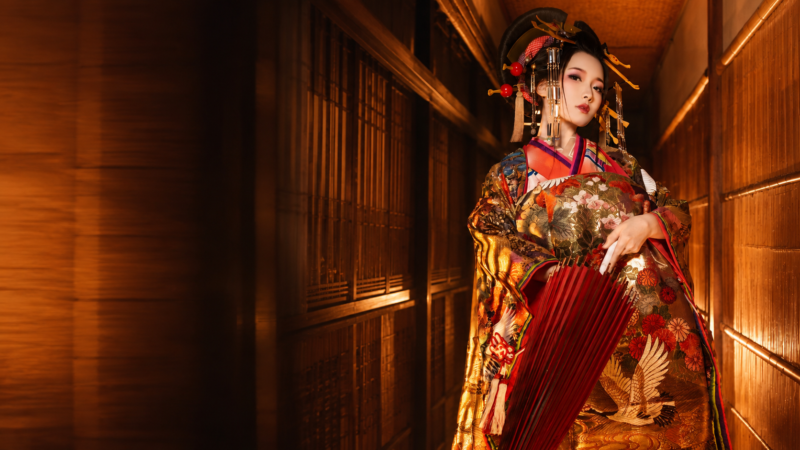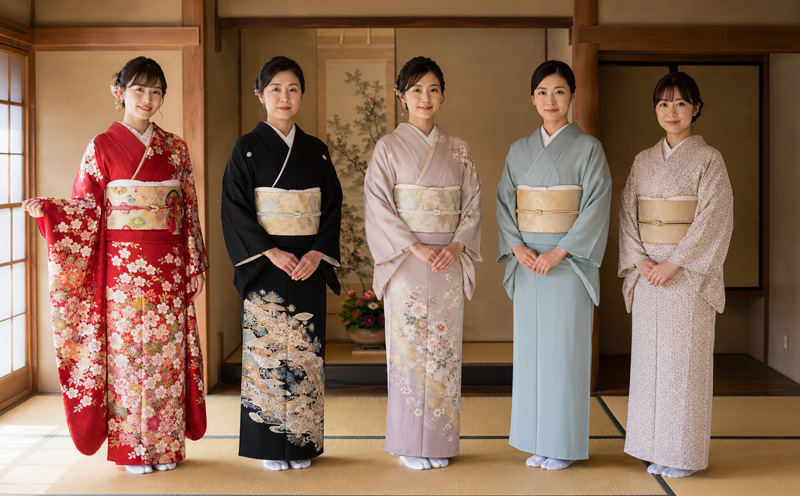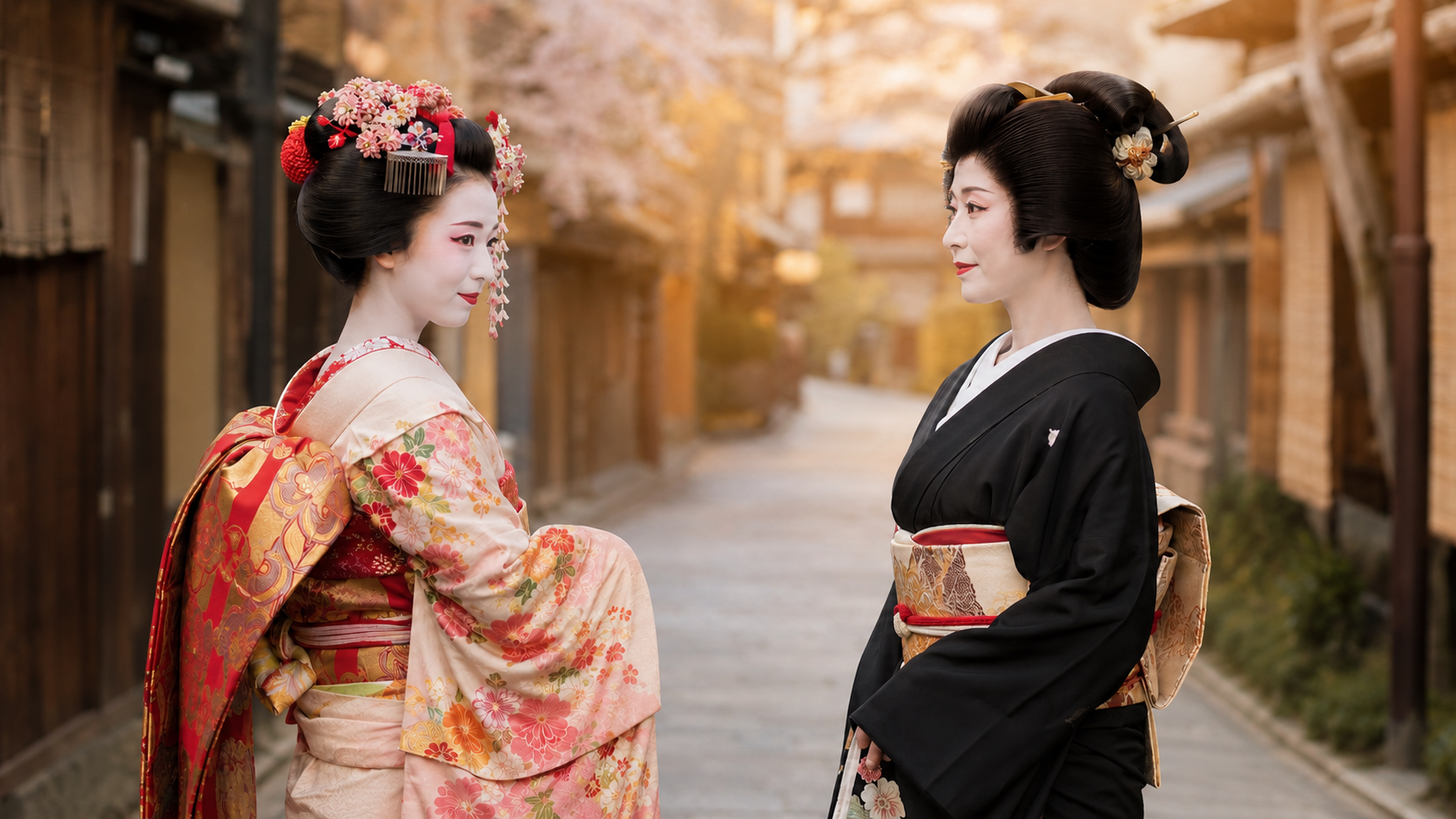
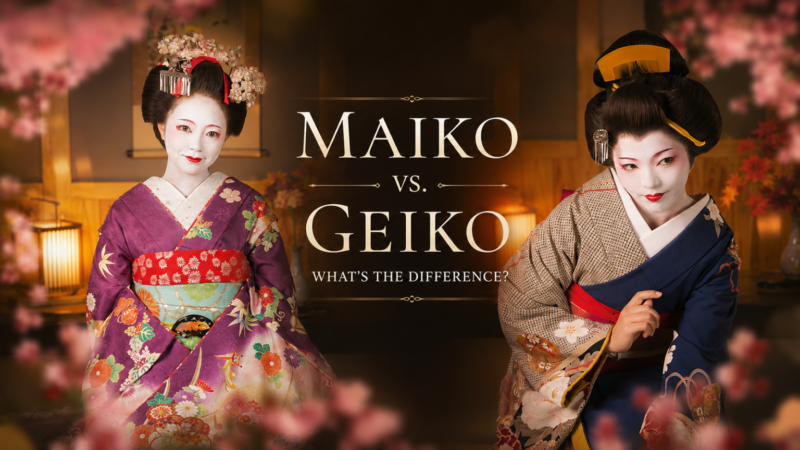
In Kyoto, a maiko is an apprentice performing artist, while a geisha — called geiko in Kyoto — is a fully trained professional. Maiko wear more colourful kimono and ornate hairstyles; geiko wear refined, mature styles. Both are artists who carry on Japan's traditional performing arts.
Maiko (apprentice) vs. Geiko / Geisha (professional)
| Aspect | Maiko (apprentice) | Geiko / Geisha (professional) |
|---|---|---|
| Status | In training | Fully qualified |
| Usual base | Kyoto's hanamachi — Gion, Miyagawa-cho and others | Kyoto as geiko; Tokyo and other cities as geisha |
| Kimono & obi | Very colourful, with a long trailing darari-obi | Subtle elegance; a shorter obi knot |
| Collar | Often red and embroidered, signalling youth | White, signalling maturity |
| Hairstyle | Own hair, dressed with seasonal kanzashi | Wig (katsura) with fewer ornaments |
| Footwear | Tall wooden okobo clogs | Low zori sandals |
| Main work | Training and performance under mentorship | Performing arts at banquets and tea houses; refined hosting |
Who Are They?
Maiko. Maiko are apprentice entertainers who study classical dance, shamisen, singing, etiquette, and traditional hosting. They typically live in an okiya, a boarding house, and are mentored by senior geiko. Their public image is youthful and vibrant — bright kimono patterns, long sleeves, and striking accessories all reflect their stage of learning.
Geisha / Geiko. Geiko are fully trained professionals. Their style is serene and understated, and their performances emphasise mastery and grace. They entertain at ochaya, tea houses, and at private events, offering music, dance, refined conversation, and games.
A Brief History
The tradition began centuries ago, as professional performing arts and hospitality developed within Japan's licensed entertainment districts.
Over time the artistic role separated from the nightlife businesses around it. Today, maiko and geiko are cultural artists, safeguarded by local communities and by their own codes of conduct.
How to Tell Them Apart at a Glance
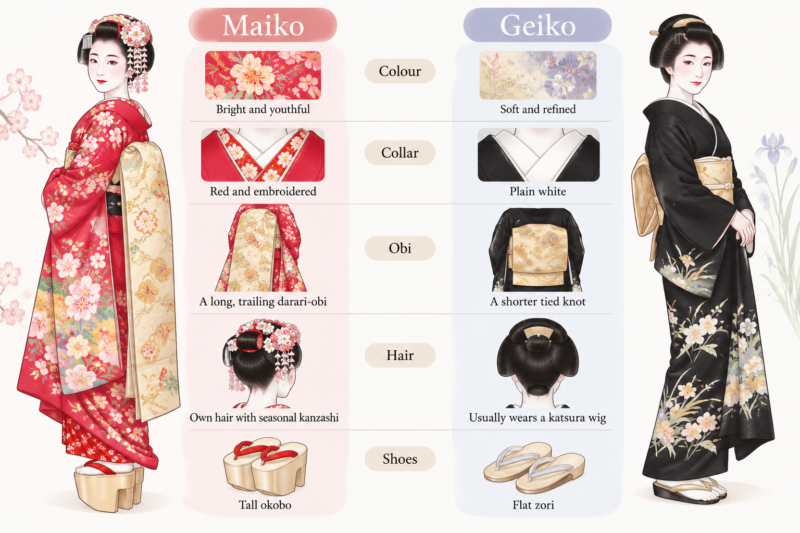
- Colour. Maiko are bright and youthful; geiko are soft and refined.
- Collar. Red and embroidered for maiko; plain white for geiko.
- Obi. A long, trailing darari-obi for maiko; a shorter tied knot for geiko.
- Hair. Maiko dress their own hair with seasonal kanzashi; geiko usually wear a katsura wig.
- Shoes. Maiko wear tall okobo; geiko wear flat zori.
Meeting a Maiko or Geiko
- Book officially. Arrange meetings through reputable venues or cultural events.
- Be punctual and respectful. Arrive on time and follow your host's guidance.
- Always ask before photographing. Some performances and some streets prohibit photography entirely.
- Keep conversation courteous. Polite, curious questions are welcome; intrusive personal topics are not.
- Dress and behave moderately. Smart-casual is fine. Keep your voice down and your phone on silent.
Common misconceptions
- "You can casually take photos with them on the street."
- Not without permission. Some districts restrict street photography to protect residents and working artists.
- "Maiko and geiko are just costumes."
- The outfits are part of a serious art form. Visitor makeover sessions are a way to appreciate the aesthetics, not the profession itself.
Practical FAQ
Is it okay to say "geisha" in Kyoto?
Locals usually say geiko; using either is understood, but “geiko” shows cultural awareness.
Are maiko always teenagers?
They are apprentices in early stages of their careers; ages vary by district rules. The key point is training status.
Can I book a private dinner with geiko?
It’s possible through approved agencies/venues and can be expensive. Always book via official channels.
What should I wear to a performance?
Smart-casual is fine unless specified otherwise by the venue.
Experience it yourself