Kimono are not one single garment but a whole system: the same basic silhouette changes meaning depending on its formality, the season it's worn in, and who's wearing it. Here's a guide to the styles you'll encounter, both in everyday Japan and at our studios.
Formality: From Everyday to Ceremonial
Just as Western fashion has a scale from jeans to a ballgown, kimono have their own hierarchy of formality, signaled mainly by sleeve length, pattern placement and the number of family crests (mon) sewn into the fabric.
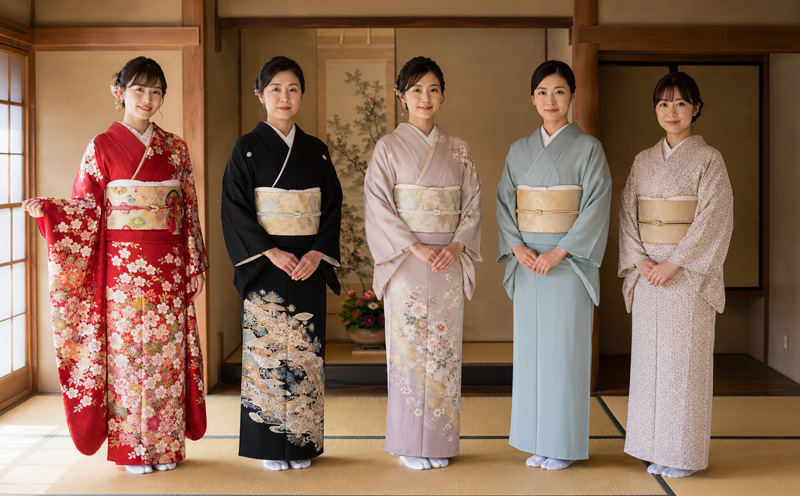
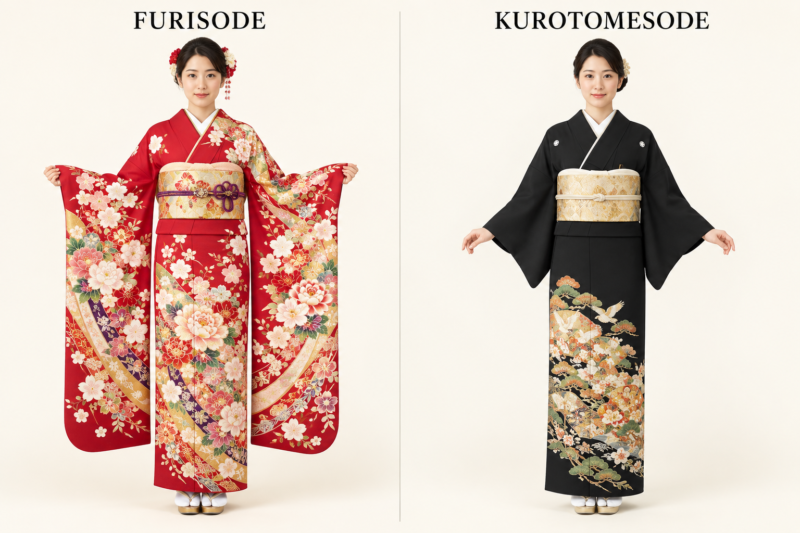
Furisode is traditionally worn by young unmarried women on formal occasions such as Coming-of-Age ceremonies and weddings. Kurotomesode, a black kimono with designs concentrated below the waist, is traditionally the highest formal dress for married women. Irotomesode uses the same style of pattern placement on a colored ground, with its level of formality depending partly on the number of family crests.
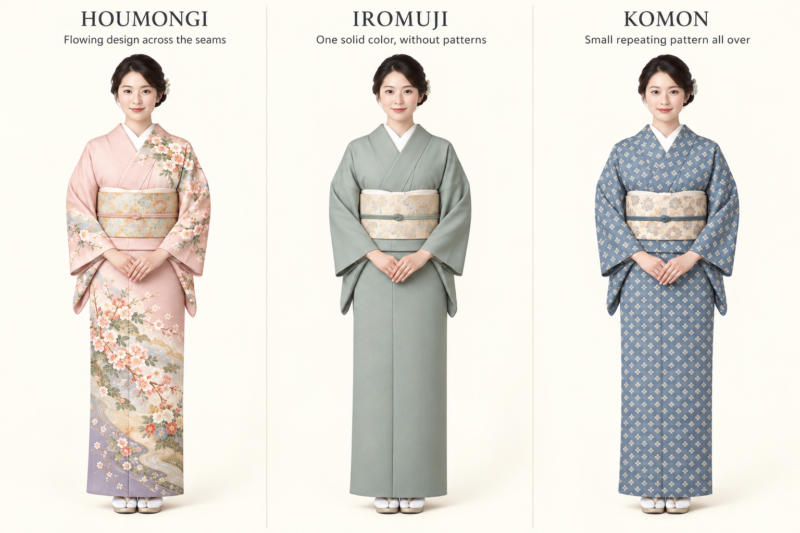
One step down is houmongi, a semi-formal kimono whose pattern flows continuously across the seams of the shoulder, sleeve and hem — elegant enough for a wedding reception or a formal dinner, but not as ceremonial as furisode. Iromuji, a kimono dyed in a single solid color, is quieter still and often chosen for tea ceremony. At the everyday end is komon, recognizable by a small pattern repeated all over the fabric, worn casually for dining out or a stroll through town.
Kimono and the Calendar
Kimono also follow their own calendar, changing not by color but by construction. Traditionally, awase is worn from October through May, hitoe in June and September, and lightweight summer kimono in July and August. Today, many wearers also adjust these conventions according to the weather.
Awase is a fully lined kimono, while hitoe is unlined and noticeably lighter, though it looks almost identical to awase. The lightweight summer kimono, known as natsumono, is woven from sheer, breathable fabric that lets the fabric — and the wearer — stay cool. This is also the season of yukata, the light, unlined cotton kimono most people first encounter at summer festivals and fireworks displays.
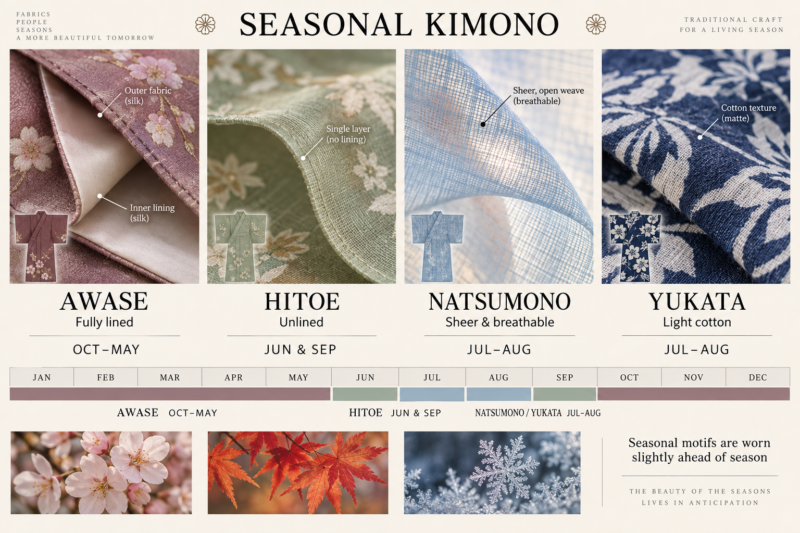
This seasonal system extends to the patterns themselves, with motifs like cherry blossoms, maple leaves or snow traditionally worn slightly ahead of their season, a small detail that experienced kimono wearers use to show they're attuned to the changing year.
Kimono Styles You Can Wear at KOKORO
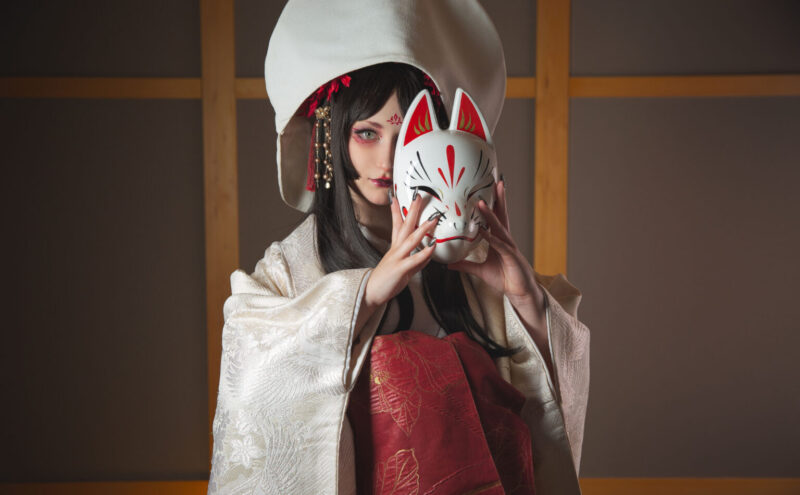
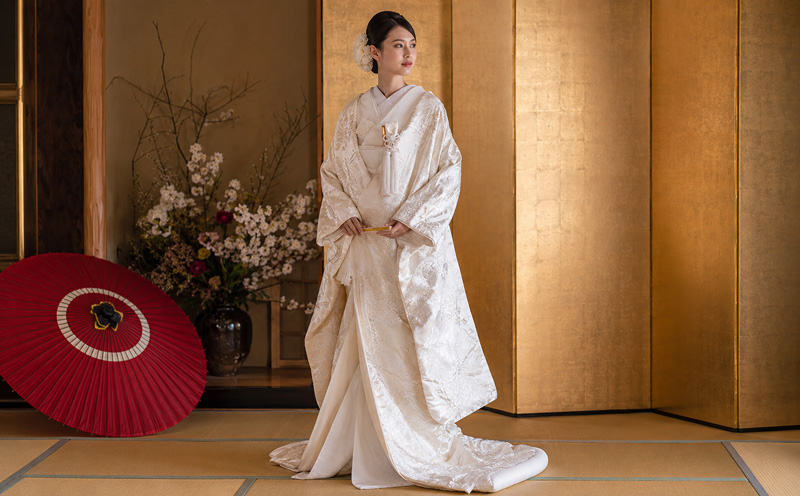
Our studios also draw on a different category: the elaborate bridal and ceremonial kimono historically reserved for weddings and celebrations. Drawing on these traditional looks, we offer a variety of kimono styles for your portrait session.
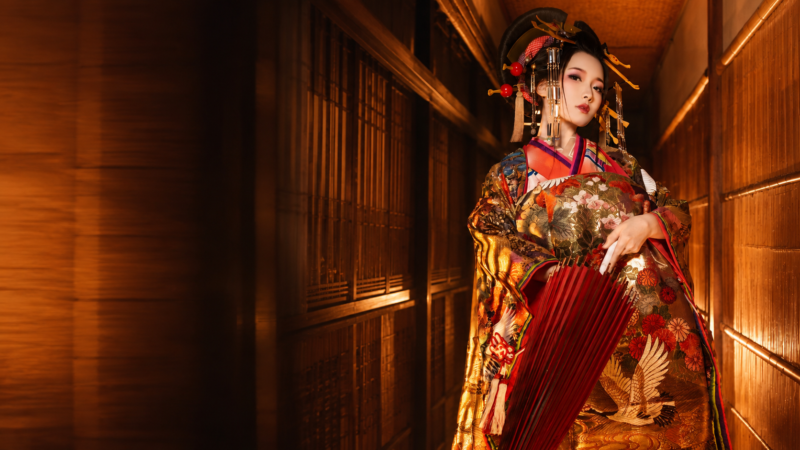
Kakeshita is the under-kimono a bride traditionally wears beneath her outer robe, with a trailing hem (ohikizuri) that pools elegantly on the floor instead of being tucked up like an everyday kimono — the source of its graceful, flowing silhouette. Uchikake is worn over it: a thick, heavily padded and richly embroidered outer robe, historically the most luxurious kimono a woman would ever wear, designed to be dazzling rather than practical.
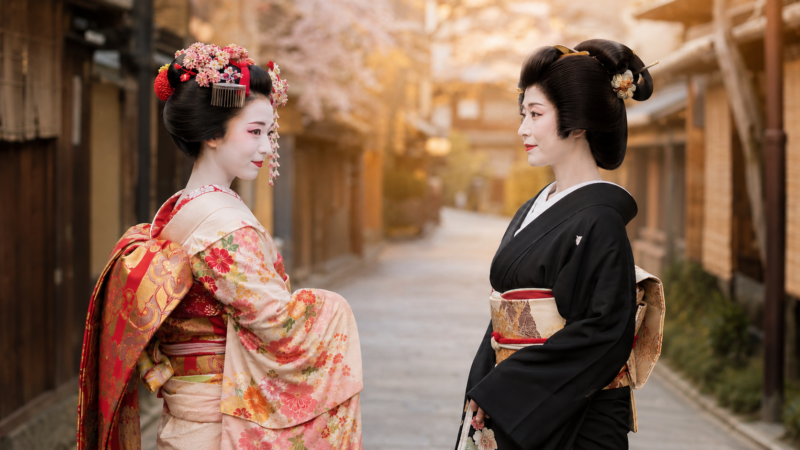
When you book a Kimono, Oiran or Maiko experience with us, our stylists will guide you through the options available and help you choose colors and patterns that suit the portrait you have in mind. At Kyoto Kokoro Group, we treasure this beautiful kimono culture — and every experience we offer takes inspiration from it, reimagined for today.
Experience it yourself