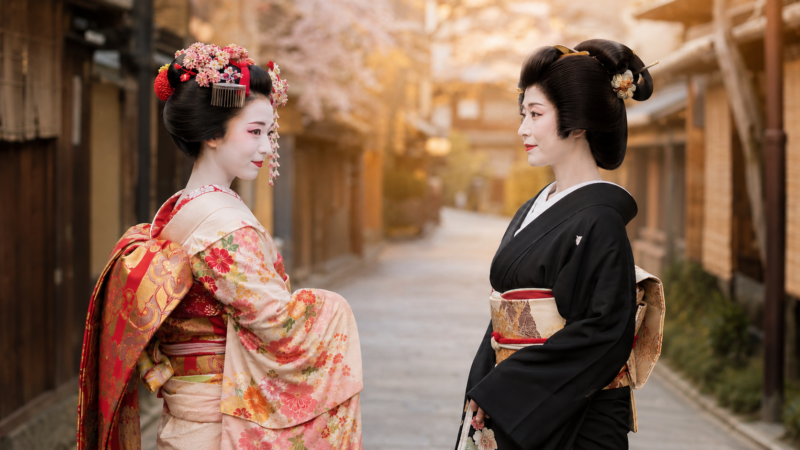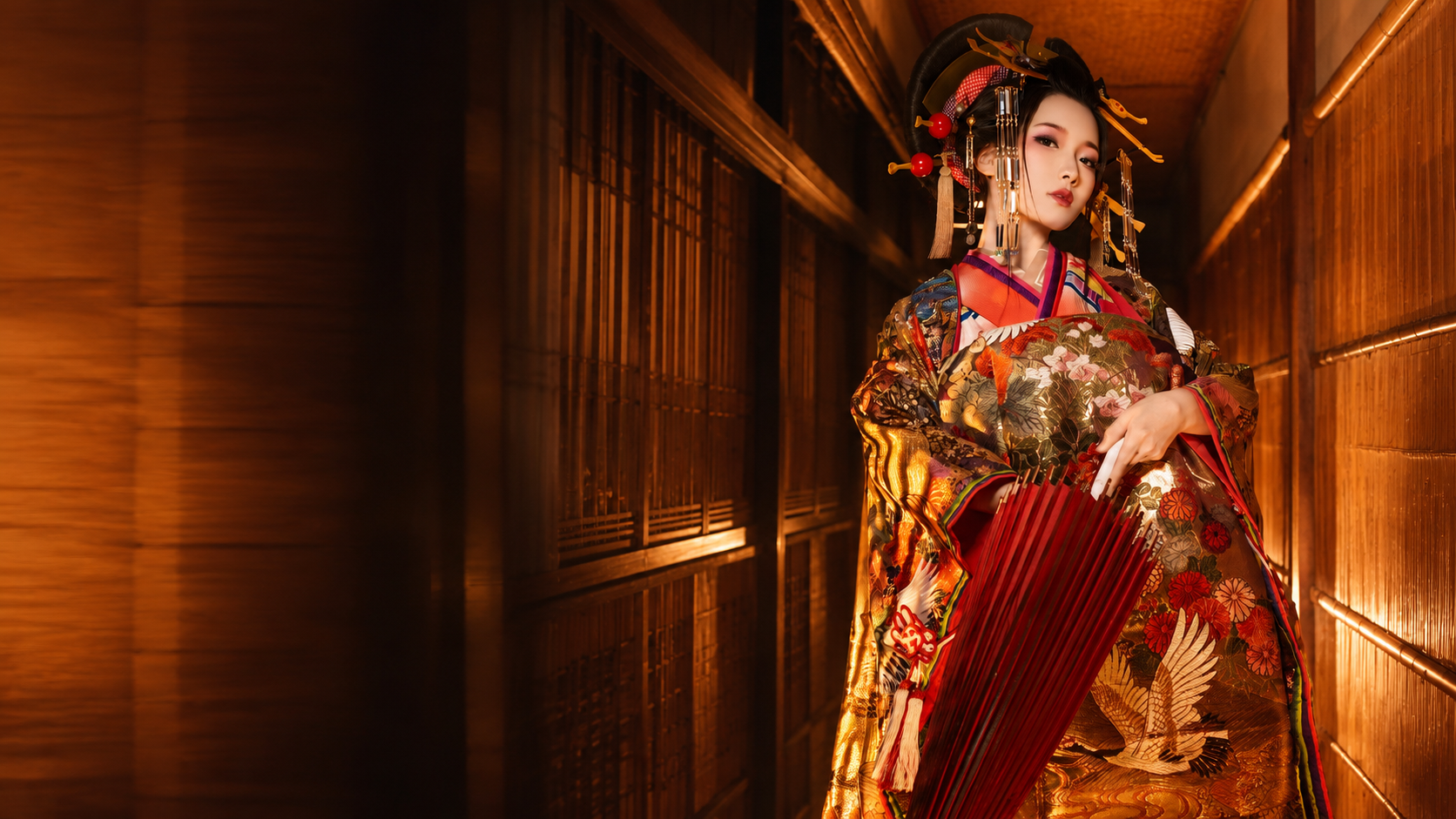
Oiran were women who captivated people with their gorgeous kimono, graceful movements, and cultural accomplishments such as music, dance, and waka poetry. Their luxurious costumes, distinctive hairstyles, and special makeup were admired by women of the time, and today, the oiran style is still known as one of the most beautiful symbols of Japanese culture.
A Brief History
In 1585, Toyotomi Hideyoshi established Japan's first officially licensed entertainment district.
Within these districts there was a strict hierarchy. The women at the very top were originally called tayu. In Edo's Yoshiwara district, as the rank of tayu gradually disappeared, the highest-ranking women came to be known as oiran.
Oiran were admired not only for their beauty, but also for their wide knowledge, manners, and artistic skill. Reaching that rank required many years of training, and very few ever achieved it.
The most celebrated oiran appeared repeatedly in ukiyo-e prints, and the styles they wore spread through the women of Edo much as a designer's collection does today.
The system was abolished in the modern era, and the rank no longer exists.
The Qualities Expected of an Oiran
Presence. An oiran was expected to have not only beautiful features, but graceful movement, refined manners, and a commanding elegance.
Knowledge and education. She was expected to be conversant in classical literature and skilled at go, so that she could hold her own with the most educated guests of the day.
Traditional arts. She also needed command of a wide range of arts — calligraphy, the tea ceremony, waka poetry, the koto, and the shamisen.
Style Leaders of Their Age
Oiran were cultural figures with a high level of artistic skill, knowledge, and refinement. Their taste shaped what the city wore.
Their influence survives in ukiyo-e and nishiki-e prints, and they continue to appear in films, novels, and manga today.
In Kyoto, several places now work to keep this cultural history alive, and oiran-style makeover experiences — which recreate that elegant appearance in a modern way — have become popular with visitors.
What Is "Oiran Dochu"?
Oiran dochu was a magnificent procession in which an oiran walked to the ageya, the teahouse where her guest was waiting.
It is said to have originated with the tayu, who processed accompanied by kamuro attendants and other members of her household.
Over time the procession became a public display of luxurious costume and graceful movement, drawing crowds who came simply to see the most celebrated oiran of the day. It was, in effect, a runway.
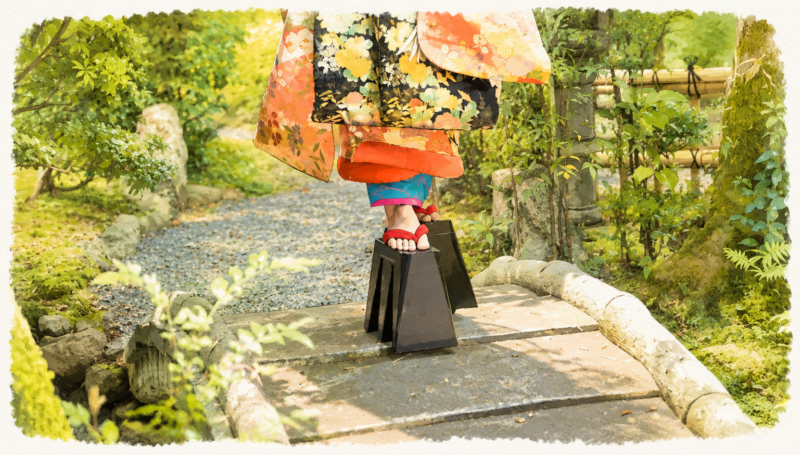
In Edo's Yoshiwara, the procession became famous for the hachimonji walk, in which the oiran wore tall black lacquered clogs about 18 cm high and traced a figure-eight with each step.
Practical FAQ
Do oiran still exist today?
No. The rank was abolished in the modern era and no longer exists as a profession. What continues today is the aesthetic — the costume, the hairstyling, and the artistry — which is preserved through cultural events and photography experiences.
Why did oiran wear such tall geta?
Height made her visible above the crowd during a procession, and the slow, deliberate figure-eight walk the clogs demanded was itself part of the display. The clogs weigh several kilograms, and walking in them took years to master.
Can I see an oiran dochu today?
Yes, though only as a staged cultural event. Several festivals in Kyoto and elsewhere hold processions each year, and tayu dochu is performed at certain temples and cultural occasions. Dates vary, so check locally before you travel.
Can children try an oiran-style makeover?
Age policies differ by studio. Please check the individual studio page, or contact the studio directly before booking.
Experience it yourself